


HanGraphy
Tooning Inc
I tried HanGraphy as a comics app with a shared-device question in mind: could it fit naturally into a household where one phone or tablet passes between people, or is it better treated as a personal reading app? My answer is fairly clear. It is an appealing place to browse colorful comics and manga, but its Mature 17+ label means the first decision is not about convenience or taste. It is about whether the intended reader is old enough and whether the device owner is comfortable with the material that may appear.
That age boundary matters even more on a family tablet. A younger reader might open the app simply because the artwork catches their attention, while an adult may assume that a comics category automatically means general-audience entertainment. I would not make that assumption here. For the right adult reader, the app can be an enjoyable way to discover illustrated stories in short sessions. For a mixed-age household, however, I would keep the decision deliberate rather than treating it as a casual shared download.
How HanGraphy fits into a shared household
The most realistic use case is a home where one person reads during a commute, another browses in the evening, and the same Android device occasionally becomes a general family screen. In that situation, HanGraphy works best when one adult has a clear reason for installing it and uses it as an individual reading destination. I would not hand over the tablet without first explaining the age rating and checking what kind of reading experience each person expects.
For me, the app’s strongest household quality is its low-friction premise. It is free to install, belongs to the comics category, and focuses on colorful illustrated reading rather than asking the user to learn a complicated creative tool. That makes it easy to try. The trade-off is that “easy to try” does not mean “suitable for everyone in the house.” The Mature 17+ classification should stay visible in the decision, especially when children use the same device.
A practical evening routine would be simple: I would use a personal profile or account where available on the device, read privately, and avoid leaving the app open when passing the tablet to someone younger. I would also discuss purchases before anyone taps through paid content. The app includes in-app items ranging from $2.99 to $199.99 each, so a free download should not be confused with a completely cost-free reading experience.
Related News

Why WhatsApp Messenger Still Makes Everyday Communication Feel Easy

Jurassic World: The Game Is the Better Dino Tycoon for Strategic Players

Threads in Real Life: Who Should Join, Lurk, or Leave

How SHEIN Turned Shopping Into an Endless Content Feed

How to Make Fortnite Feel Smarter on Mobile

Should You Switch to Microsoft Outlook on Mobile?
That price range changes how I would manage a shared device. I would never rely on a child’s understanding of a payment screen, and I would not let a guest assume that every visible chapter or item is included. Even when the reader is an adult, agreeing on a spending rule first prevents an awkward conversation later. The useful boundary is not “the app is free”; it is “installation costs nothing, while some optional items can cost real money.”
What the first setup should establish
Before reading, I would settle three questions: who is the intended reader, which account is being used, and who is allowed to make purchases. These are ordinary household decisions, but they matter here because a comics app can be opened impulsively and because the age label is not aimed at young children. If the tablet belongs to several people, I would also decide whether reading history and recommendations should remain personal rather than becoming a shared trail.
I would not invent a family-control system that the app has not clearly presented. Instead, I would use the controls already available on the device and keep responsibility with the adult managing it. That may mean a separate user account, a device-level purchase restriction, or simply limiting access to the person who installed the app. The important point is that HanGraphy should not be treated as a neutral children’s bookshelf just because its pages are illustrated.
Gallery
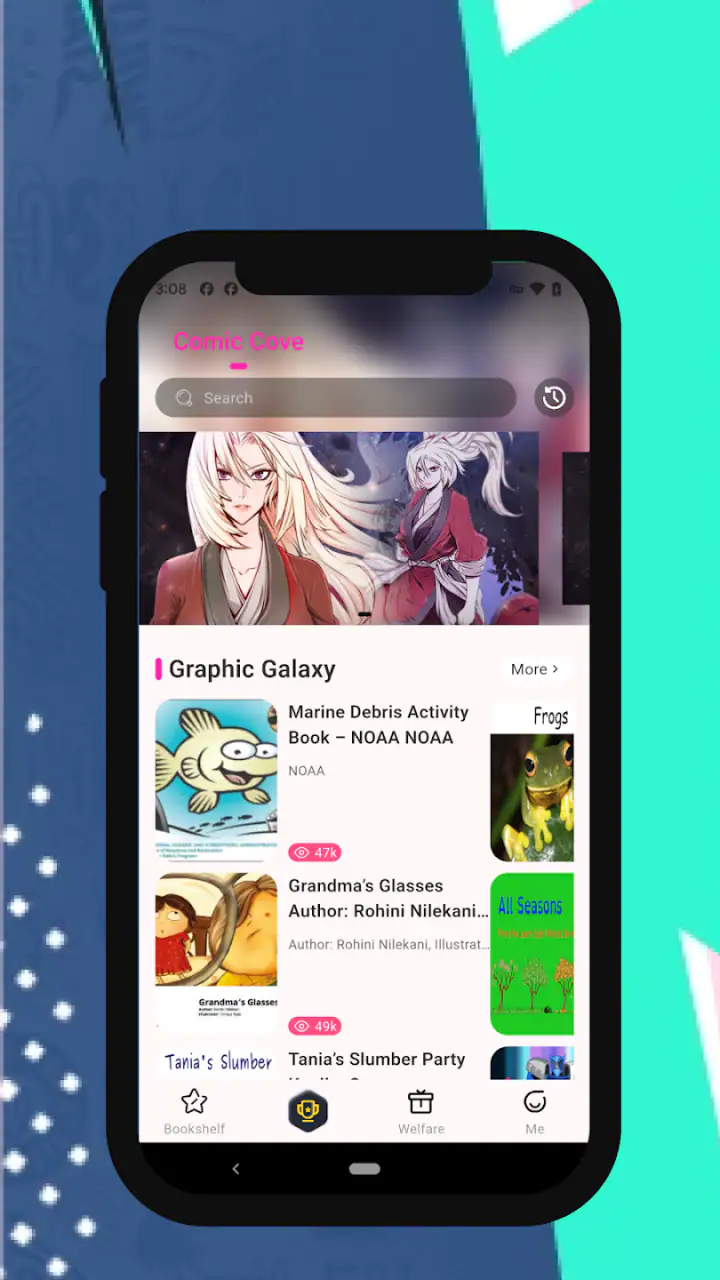
The developer is Tooning Inc, and the app’s current version is 1.0.14. Those details are useful when troubleshooting or checking whether everyone in the household is running the same release. The minimum requirement is Android 7.0, so older devices may still be relevant, but I would check the actual device experience rather than assuming that compatibility guarantees smooth reading. Screen size, battery condition, and the way each person holds the device will affect comfort more than the version number alone.
On a phone, I would expect the experience to suit brief reading breaks better than long group sessions. A tablet gives illustrated pages more room and is easier to pass around, but that also makes it more likely that another household member will open the app casually. The bigger screen improves readability while increasing the need for clear boundaries. That is a small but important trade-off in shared homes.
Keeping accounts and reading habits separate
Shared devices create a subtle problem: one person’s browsing can influence what another person sees next. If HanGraphy presents recommendations or recently viewed material, a household reader may encounter choices selected by someone else. I would therefore avoid treating one shared account as a communal library unless everyone is comfortable with the overlap. Separate device profiles are cleaner when the operating system supports them, while a single profile requires more trust and communication.
I would also avoid leaving a partially read mature comic on the screen. This is not about hiding ordinary reading; it is about preventing an accidental handoff. A good routine is to close the app after reading and return the device to a neutral screen. That takes seconds and is more reliable than assuming that every family member will remember what the previous reader was viewing.
Another useful habit is to keep purchases attached to the adult who understands the payment consequences. If several people use the same store account, I would review the purchase flow before allowing shared use. The app’s free entry point makes experimentation tempting, but the upper end of its individual purchase range is substantial enough that “just tap to see” is not a sensible household policy.
I would also be cautious about recommending the app to a friend without mentioning the age rating. The colorful presentation may suggest something light and universal, yet the Mature 17+ classification sets a different expectation. A short warning is more helpful than a vague recommendation: it tells the other person to approach HanGraphy as adult-oriented comics and manga, not as a general family reading app.
Coordinating reading without making it complicated
For adult housemates or partners, HanGraphy can work well as a shared discovery topic. One person can point out a series or style that the other might enjoy, then each reader can explore independently. I prefer that arrangement to passing the device back and forth while someone is halfway through a story. It preserves personal reading pace and avoids mixing up where each person stopped.
For parents and older teenagers, the conversation needs to be more specific than “this is a comics app.” I would explain that the app is rated Mature 17+, ask whether the teenager understands the boundary, and agree on whether purchases are allowed. That approach respects the older reader without pretending the rating is irrelevant. It also gives the adult a chance to decide whether the app belongs on a shared family device at all.
A helpful coordination trick is to use a simple household rule for recommendations: mention the title or theme verbally, but do not open the app in front of a younger child merely to demonstrate it. This keeps curiosity from becoming accidental access. It is especially useful when the same tablet is used for schoolwork, entertainment, and adult reading.
I would also separate “reading together” from “showing everything.” Two adults can comfortably look at the same page and discuss the artwork, pacing, or character design. With minors, the Mature 17+ label means I would not assume that a parent’s approval of one title automatically applies to every other title in the app. The broader catalog context matters, and a shared recommendation should remain an adult judgment rather than a blanket endorsement.
What the app is like for an individual reader
Outside the household question, HanGraphy’s appeal is straightforward: it offers a focused place for comics and manga with a strong visual identity. I found that more inviting than a general web browser when I wanted to read rather than search across unrelated pages. The app’s store summary emphasizes color, character, and charm, and that matches the reason I would open it: to spend a few minutes with illustrated storytelling, not to manage a large digital library.
Its average rating is 4.2 from around seventy ratings, which suggests a generally positive early response but not the depth of feedback I would expect from a long-established mainstream platform. I read that as a reason to keep expectations measured. The score is encouraging, yet it is not enough by itself to prove that every reader will find the catalog, navigation, or payment approach ideal.
Compared with a broad comic subscription service, HanGraphy feels like a more focused experiment rather than a replacement for every reading need. A larger service may be better if you already depend on a deep back catalog, established account management, or a familiar cross-device library. A web browser may be better for someone who wants to jump among many publishers and sources. HanGraphy makes more sense when you want a dedicated app and are willing to explore what its particular selection offers.
Compared with a physical manga volume, the advantage is convenience: the device is already in your hand, and a short reading session does not require carrying another book. The disadvantage is that the experience depends on the screen and the app’s own presentation. If you care about collecting editions, lending books, or reading without a device nearby, a physical copy remains the better choice. I would see HanGraphy as complementary, not automatically superior.
Age, trust, and the limits of a family recommendation
The Mature 17+ rating is the clearest reason I would not recommend this app to a child or place it casually on a shared children’s tablet. Illustrated characters can make mature material look approachable, and that visual style can blur an adult’s first impression. In my view, the rating should be treated as a firm starting point for household decisions, not as a minor note beneath the download button.
That does not make the app unsuitable for every family. In a home with adults and older teens, a transparent conversation may be enough. But the adult should make the decision title by title and person by person. Trust works better when it is specific: who may read, when may they use the app, and may they buy anything? “Everyone can use it” is too vague for this particular age context.
I would also skip HanGraphy for anyone looking specifically for children’s comics, educational reading, or a safe shared catalog for younger siblings. The app’s category and colorful presentation do not override its age classification. For those needs, a deliberately child-focused service or a curated physical collection would be a more appropriate direction, even if it offers fewer visual surprises.
Privacy and account boundaries deserve the same calm attention. I would avoid sharing one adult’s store credentials with other household members and would check the device’s normal account settings before allowing purchases. I would not promise that the app itself will solve family separation, because the safer approach is to combine sensible device management with direct communication.
Small details that improve the experience
My first practical tip is to read on the largest comfortable screen available, but only if that device has a clear user boundary. A tablet can make artwork easier to appreciate and reduce eye strain during longer sessions, yet it is also more visible to people nearby. A phone is more private but less spacious. The best choice depends on whether readability or household visibility is the bigger concern.
My second tip is to treat the free installation as a trial period rather than a promise of unlimited access. Browse enough to decide whether the visual style and available stories suit you before spending money. Because individual purchases can range from a few dollars to much higher amounts, I would set a personal limit and confirm every transaction rather than buying impulsively during a compelling scene.
My third tip is to make a separate reading routine for shared devices. Open the app only when you have enough uninterrupted time to finish the session, close it afterward, and tell the next user if the device is ready for general use. This sounds basic, but it prevents mature material from appearing unexpectedly and keeps different readers from confusing one another’s place.
A fourth insight is that the app’s modest audience size can be both useful and limiting. With over ten thousand installs, it is not an unknown experiment, but it also does not have the enormous community visibility of the biggest comics platforms. I would enjoy that sense of discovery if I liked exploring less familiar catalogs. I would skip it if I needed extensive community discussion, guaranteed breadth, or a platform already used by everyone I know.
My household verdict
After considering both personal reading and shared-device use, I see HanGraphy as a free-to-start comics app for adults who enjoy colorful manga-style storytelling and do not mind exploring a more focused catalog. Tooning Inc has created something easy to approach, and the 4.2 average gives a new reader a reasonable reason to investigate. The app is most convincing when used intentionally, by someone who understands the age rating and the possibility of paid items.
I would recommend it to an adult friend who wants a dedicated comics experience for short breaks, relaxed evening reading, or visual discovery beyond the usual browser search. I would mention the Mature 17+ classification before mentioning the artwork, because that is the detail most likely to affect whether it belongs on a household device. I would also explain that the download is free while optional purchases can become expensive, so a little account discipline is worthwhile.
I would not recommend it as a general family app, a children’s reading shelf, or a substitute for a large established comic library. Those are different jobs, and another service or physical books may serve them better. For a household with adults, separate boundaries, and a clear spending rule, though, it can fit comfortably into a personal reading routine.
My final advice is simple: choose HanGraphy for the reader, not merely for the device. If the intended user is an adult who likes colorful comics and wants a free starting point, it is worth trying. If the device is mainly shared with younger family members, I would keep looking for a more clearly age-appropriate option. That distinction makes the app much easier to enjoy without creating avoidable confusion at home.
FAQs for HanGraphy
What is HanGraphy and what can I use it for?
HanGraphy is an app focused on helping users explore, study, and practice Han characters through visual and written references. It can be useful for learners of Chinese, Japanese, or Korean writing systems, depending on the content available in the installed version. Before downloading, check the store description and screenshots to confirm that its character database and learning tools match your specific language and study goals.
Is HanGraphy suitable for beginners?
HanGraphy can be helpful for beginners because character-based writing is easier to understand when information is presented visually and organized in a clear way. New learners should still expect to spend time learning pronunciation, meanings, stroke order, and usage in real words or sentences. The app works best as a study companion rather than as a complete replacement for a structured language course or teacher.
Does HanGraphy work offline?
Offline availability may depend on the version of HanGraphy and the type of content being accessed. Basic reference material may be stored on the device, while updates, additional resources, advertisements, or online features could require an internet connection. If offline study is important to you, review the app’s current store listing and test the main sections after installation before relying on it while traveling.
Is HanGraphy free to download and use?
HanGraphy may be available as a free download, but the exact business model can vary by platform and region. Some features might be supported by advertising, optional purchases, or premium access. Users should check the Google Play Store or Apple App Store listing for current pricing, in-app purchase details, and subscription conditions. This is especially important if the app will be used by children.
What should I check before installing HanGraphy?
Before installing HanGraphy, verify that your device meets the required Android or iOS version and that enough storage space is available. It is also worth checking the latest update date, user reviews, privacy information, supported languages, and requested permissions. If you need a particular feature—such as stroke-order animation, pronunciation, search, bookmarks, or progress tracking—confirm that it is included in the current version rather than assuming it is available.
Pros
- Clear graph-based interface for organizing notes and ideas visually.
- Useful for connecting related information and discovering patterns.
- Supports more flexible thinking than a traditional linear notebook.
- Can help structure research
- projects
- and personal knowledge.
- Visual layouts make complex topics easier to review at a glance.
Cons
- The learning curve may be steep for users unfamiliar with graph note-taking.
- Large graphs can become difficult to navigate as more content is added.
- Some advanced features may require time to understand and configure.
- Visual organization may feel slower than quick text-based note taking.
- Compatibility and sharing options may be limited compared with mainstream apps.


